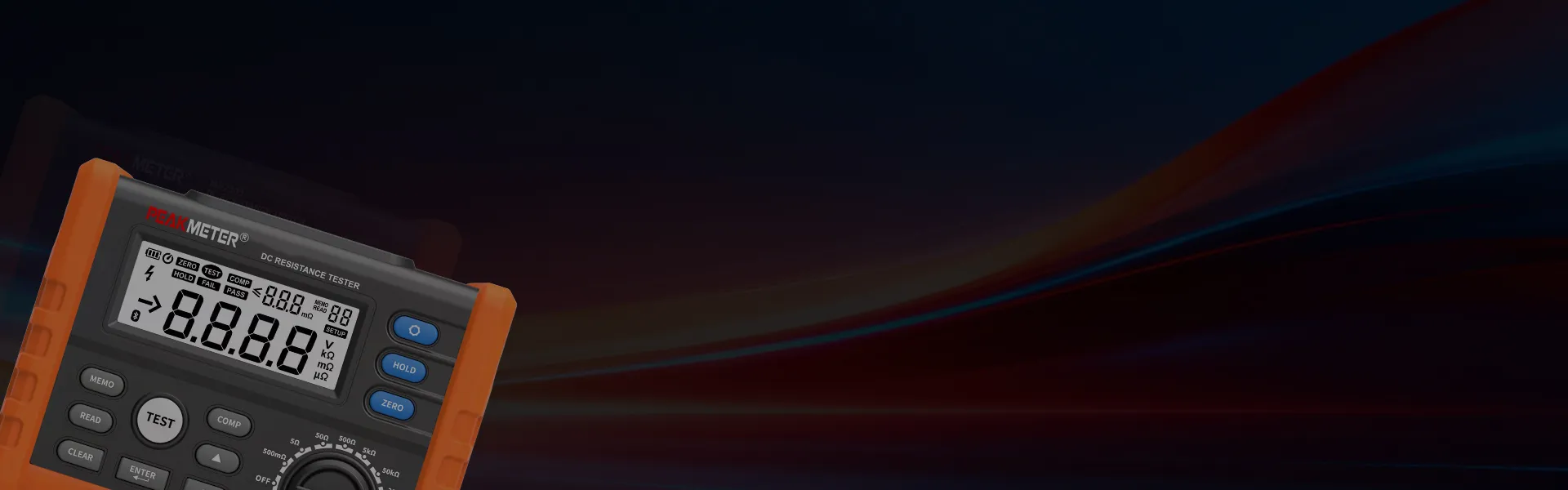
1. High Precision for Lightning Safety Compliance
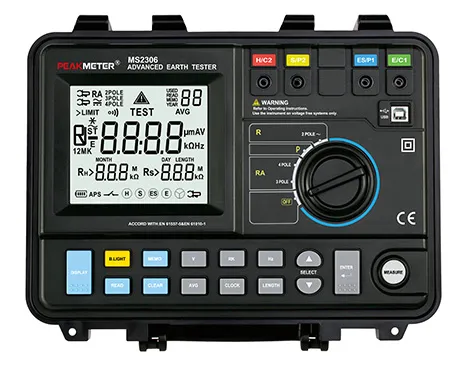
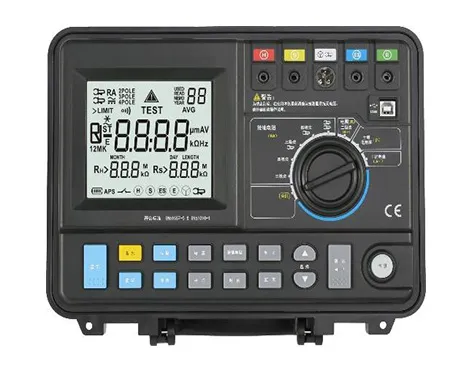
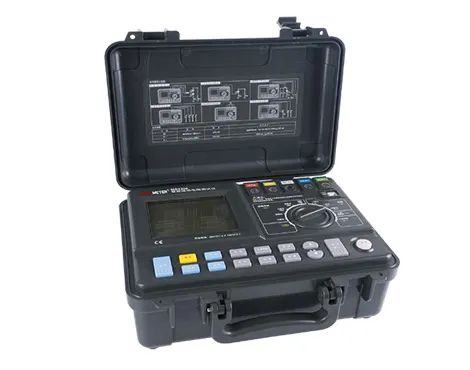
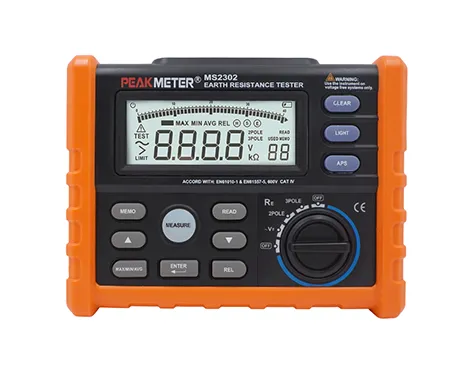
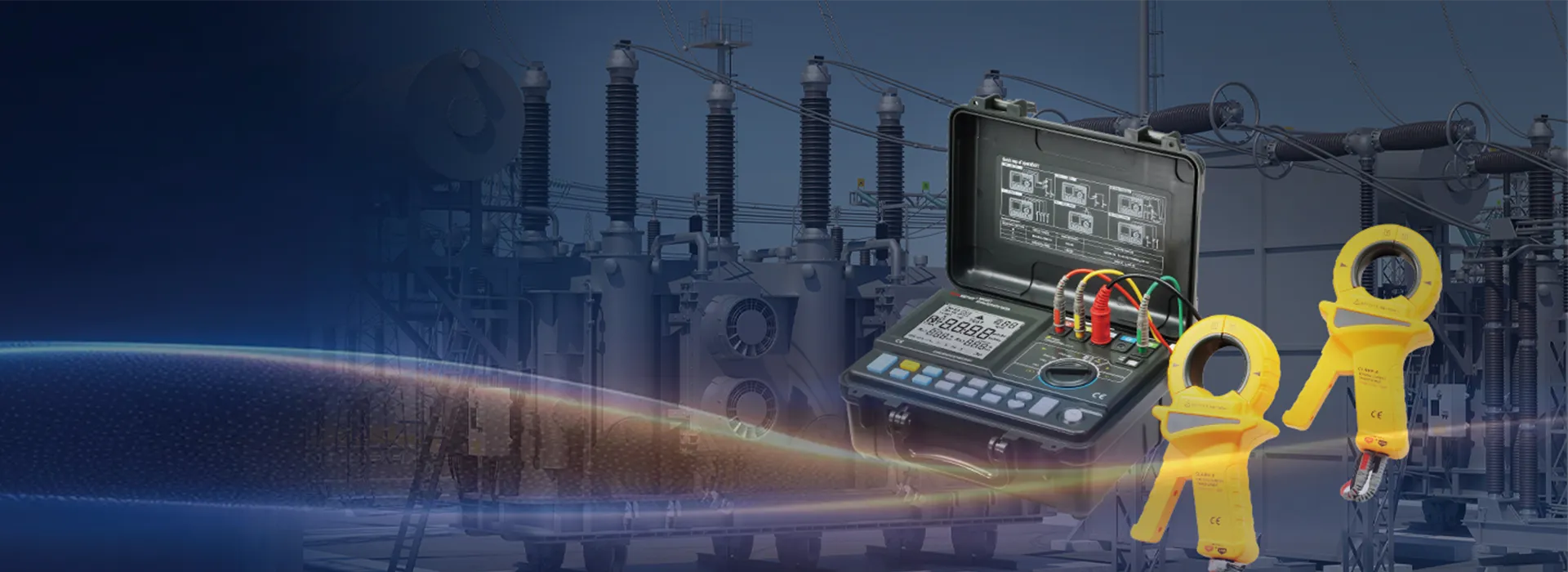
Peakmeter earth resistance tester delivers accurate, consistent low-resistance readings that fully meet industry lightning protection standards. It precisely detects subtle grounding resistance deviations, effectively verifying whether lightning grounding systems can safely discharge surge current and eliminate hidden lightning hazards for buildings and equipment.
2. Multi-Mode Testing Adapts to Complex On-Site Scenarios
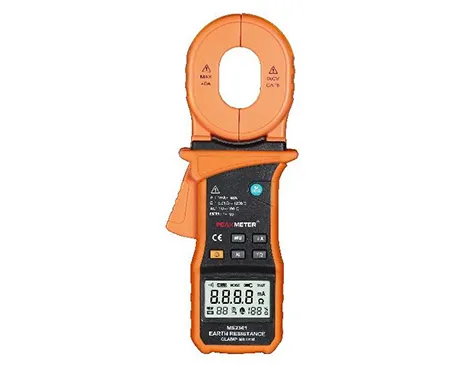
Equipped with professional 2-pole, 3-pole and clamp testing modes, it supports diverse detection needs for lightning protection grounding. It can test single-point grounding resistance and soil resistivity, and complete non-disassembly testing for interconnected grounding networks, perfectly fitting outdoor engineering and facility lightning detection work.
3. Reliable Data Recording for Standard Inspection
The built-in data storage and hold function stably records test data of lightning grounding systems. Complete and traceable test reports help users pass regular safety audits and lightning protection inspections, providing credible data support for system maintenance and acceptance.
1. 3-Pole Fall-of-Potential Method: Standard Benchmark for Single Isolated Ground Electrodes
The 3-pole potential drop method is Peakmeter’s foundational measuring technology, operating by injecting stabilized low-frequency AC constant current between the tested ground electrode (E) and remote current auxiliary stake (C), while capturing the voltage differential via the intermediate potential stake (P) to calculate resistance with Ohm’s Law R=V/I. Unlike DC testing that triggers soil polarization errors, Peakmeter selects 94Hz–128Hz AC test signals to eliminate electrochemical offset, with dedicated 20V/48V adjustable test voltage for dry, high-resistivity soil and moist construction sites respectively. This method delivers certified accurate readings for standalone ground rods of solar panels, communication towers and small distribution cabinets, and serves as the calibration reference for verifying other testing modes on-site.
2. 4-Pole Wenner Method: Ultra-High Precision for Soil Resistivity & Large Grounding Grids
Peakmeter’s 4-pole Wenner measurement separates independent current and voltage signal loops to fully exclude resistance interference from test leads and electrode contact resistance, solving the core accuracy flaw of 3-pole testing on low-resistance large grounding networks. Four equally spaced metal probes are inserted linearly into soil; the outer two electrodes output fixed AC current, while inner probes measure pure soil voltage drop to compute true soil resistivity without wire resistance distortion. This method is mandatory for substation grid design, industrial plant grounding engineering and lightning protection project acceptance, where precise soil parameter data determines the quantity and depth of ground electrodes to meet national electrical safety compliance codes.
3. Dual-Clamp Non-Disconnect Measurement: Fast Selective Testing for Interconnected Ground Networks
Equipped with dual voltage/current clamps, Peakmeter earth testers adopt the clamp induction measurement method that requires no auxiliary ground stakes and no disconnection of existing grounding branches, drastically cutting field setup time for complex multi-ground interconnected systems in factories and commercial buildings. One clamp induces a stable AC test voltage on the ground downlead, while the second clamp detects the return current signal flowing through parallel grounding paths; the processor automatically filters stray grid interference to isolate the resistance value of a single target grounding branch. This method avoids the safety risks of cutting live grounding conductors and enables rapid troubleshooting of corroded, loose or broken ground connections without halting equipment operation.
4. 2-Pole Simplified Measurement + AFC Anti-Interference Calibration: Auxiliary Quick Detection Mode
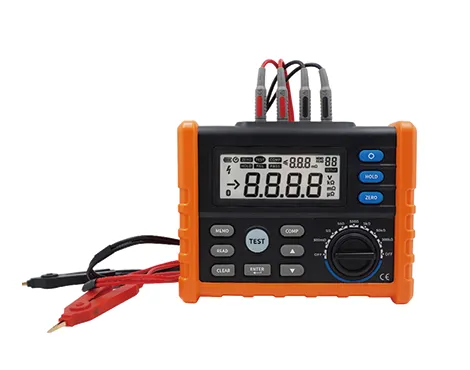
Peakmeter retains the convenient 2-pole two-terminal test mode for emergency quick checks when auxiliary ground stakes cannot be buried, using existing building metal water pipes or public power earth terminals as reference electrodes for rapid resistance screening of equipment shell grounding. To fix data drift caused by industrial electromagnetic noise, the built-in AFC (Automatic Frequency Control) system automatically scans surrounding interference frequencies and switches to an unaffected test frequency from four preset options, while real-time interference voltage and leakage current detection triggers audible alarms when ambient noise exceeds safe thresholds. Combined with automatic temperature compensation and 100-group data storage for comparative analysis, this dual auxiliary technology ensures stable, repeatable readings even in high-noise factory and substation environments.

 English