
1. Pre-Test Safety and Device Preparation
Power off the three-phase motor and related circuit equipment first for safe operation. Inspect the tester and test probes for damage, wear or poor contact. Clean the circuit terminal surface to remove dust and oxide, ensuring stable and safe testing conditions.
2. Correct Wiring Connection for Three-Phase Circuit
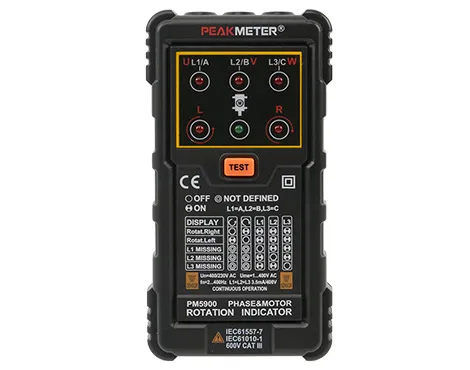
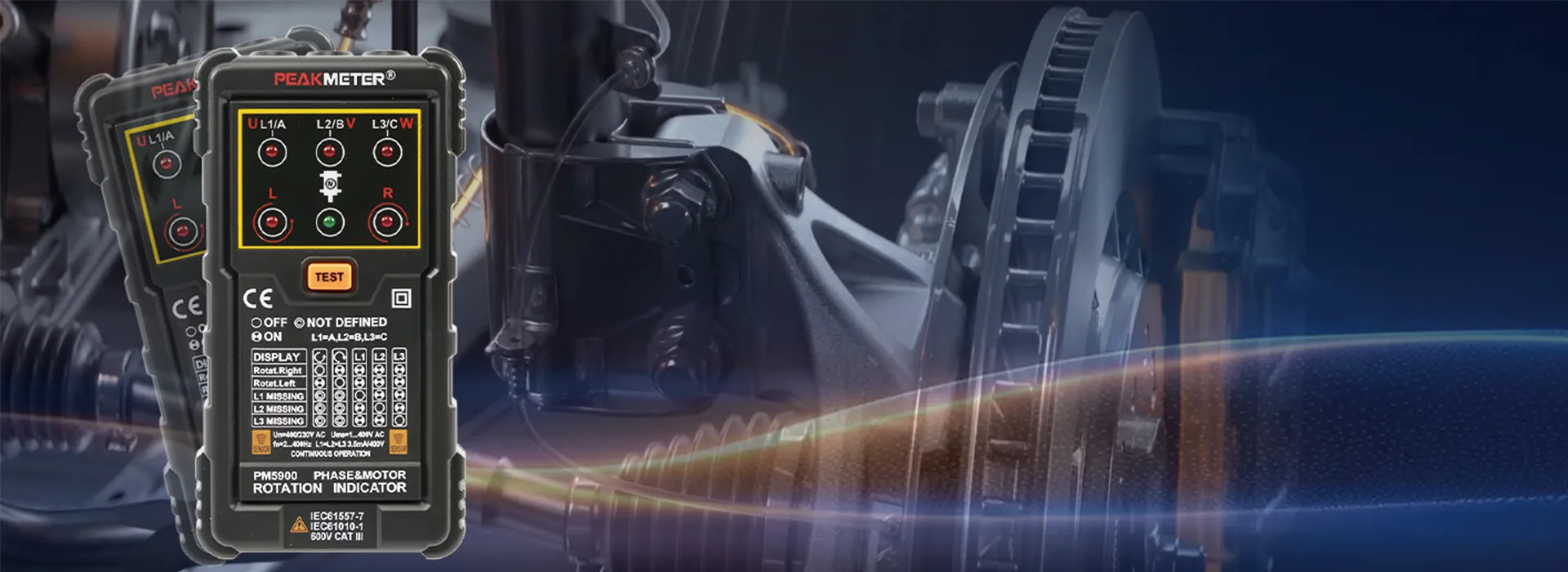
Connect the three test probes of the Peakmeter phase rotation tester to the corresponding U, V, W three-phase terminals of the motor or power supply strictly in order. Ensure each probe is firmly clamped with no loose connection or cross wiring to avoid wrong detection results.
3. Power On and Execute Phase Detection
Restore the normal power supply of the three-phase circuit after confirming correct wiring. Turn on the tester, and the device will automatically identify the phase sequence status. The built-in indicator lights and screen data will real-time display the phase rotation direction without complex manual setting.
1. Eliminate Dangerous Trial Motor Startup to Protect Electrician Personal Safety
Traditional field methods require temporary power connection to test motor rotation, exposing electricians to severe safety threats including reverse mechanical kickback, sudden belt ejection, short-circuit sparks and arc flash injuries at industrial sites. Peakmeter’s unique non-contact magnetic induction function lets technicians predict motor forward/reverse rotation just by placing the tester above the motor shaft without any live temporary wiring or energized trial runs. The built-in phase loss alarm also instantly alerts users if one live wire is disconnected, preventing hidden shock hazards caused by incomplete three-phase circuits before powering on. Its insulated alligator clips and overvoltage protection further block electric leakage risks during power line phase sequence testing, building a complete personal safety barrier for electricians working on pumps, compressors and large industrial motors.
2. Prevent Costly Motor & Equipment Damage Caused by Reversed Phase Sequence
Wrong phase sequence forces three-phase motors to rotate backward, triggering irreversible damage to precision mechanical equipment such as water pumps failing to deliver liquid, HVAC fans blowing reverse air, conveyor belts running backward and high-pressure compressors suffering bearing burnout and coil overheating. Even short reverse startup can burn motor windings, crack gearboxes and trigger full factory production line shutdowns, leading to expensive motor replacement fees, production loss and delayed project delivery. Peakmeter tester clearly displays clockwise/counter-clockwise rotation results via bright LED indicators, enabling electricians to adjust wiring order in advance to match design rotation requirements. For variable-frequency drives, generators and grid-connected solar three-phase systems, it also verifies matching phase sequences to avoid inverter failure and parallel power grid short-circuit faults, drastically reducing post-installation maintenance costs for electricians and their clients.
3. Boost On-Site Working Efficiency & Simplify Complex Three-Phase Troubleshooting
Without a dedicated phase rotation tester, electricians waste hours tracing reversed wiring, checking contactors and replacing thermal relays just to locate simple phase sequence errors in complicated three-phase distribution cabinets. The Peakmeter compact handheld unit supports wide 1–400V AC and 2–400Hz frequency coverage, adapting to regular mains power, portable generators and marine variable-frequency motor equipment. One-click TEST button delivers instant readable results, with independent LED lights marking L1/L2/L3 phase status to quickly identify loose terminals, missing phases and mislabeled cable wires during new building wiring or old facility renovation. Its lightweight 168g rugged anti-drop body fits tight electrical rooms and outdoor construction sites, cutting motor commissioning time by over 70% and allowing electricians to complete more inspection and installation tasks within limited working hours.


 English