
1. Pre‑test Equipment Preparation
Power on the tachometer and confirm stable screen display. Clean the rotating‑object surface and stick reflective mark for non‑contact testing.
2. Maintain Proper Measuring Distance
Align the built‑in laser beam straight at the reflective sticker. Keep the recommended testing distance and avoid shaky hands during detection.
3. Avoid Environmental Interference
Stay away from strong ambient light and dust. Keep the laser path unobstructed to prevent interrupted laser signals and fluctuating RPM data.
1. Reliable optical sensing technology delivers precise non‑intrusive rotational‑speed measurement
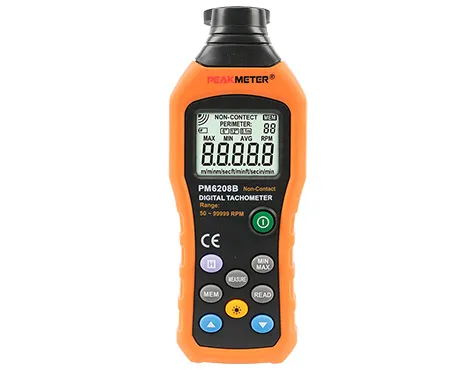
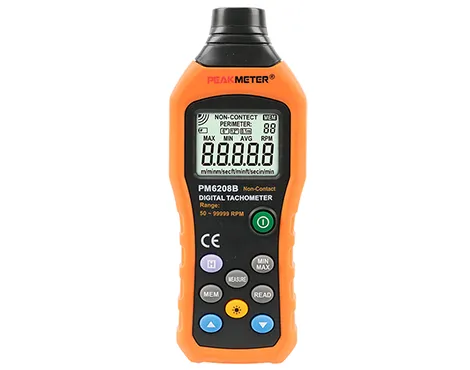
Our non‑contact laser tachometer adopts high‑performance laser‑optical sensor to capture rotating‑target reflection marks without physical touch on spinning motor shafts, fan wheels and transmission rollers. It avoids abrasion risks to rotating machinery and eliminates measurement deviation triggered by contact‑type probe friction. With wide‑ranging RPM testing scale and quick response speed, technicians can read stable rotational‑speed data for low‑speed slow‑running motors and high‑speed spindle‑equipment within seconds.
2. User‑friendly practical functions streamline motor‑equipment inspection and routine maintenance
Each PEAKMETER laser tachometer is equipped with data‑hold, maximum‑minimum‑average speed memory and clear backlit‑LCD screen for reading values in dim‑light machine cabinets and poorly‑lit workshops. The adjustable laser positioning aid helps maintenance workers aim accurately at tiny shaft surfaces in compact‑structured motors. Low‑battery alert and automatic power‑off design cut down unnecessary battery consumption during full‑day equipment troubleshooting on the production line.
3. Heavy‑duty portable build and broad‑scene compatibility for diverse industrial motor‑testing jobs
Shock‑proof double‑injection‑moulded outer casing protects internal laser components from workshop dust, minor liquid splashes and accidental drops during field inspection. It performs excellently for induction‑motor speed calibration, cooling‑fan fault checking, conveyor‑roller testing, generator‑unit inspection and HVAC‑blower‑wheel diagnosis. Its lightweight handheld‑style body supports one‑hand operation, allowing engineers to inspect multiple distributed motors conveniently.


 English